HVOF and HVAF Coating Processes: Technical Comparison and Industrial Applications in India

Among the thermal spray processes available to Indian industry for surface protection and component restoration, HVOF and HVAF represent the current state of the art. Both processes deposit dense, well-adhered coatings at high particle velocities, producing coating properties that earlier thermal spray technologies could not achieve. Yet despite sharing the same fundamental mechanism of high-velocity particle deposition, HVOF and HVAF differ in ways that matter considerably to the engineer specifying a coating for a critical industrial application.
How the HVOF Coating Process Works
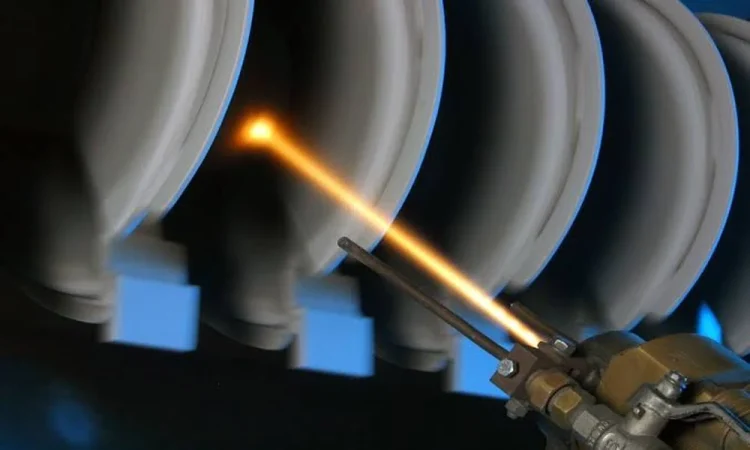
The HVOF coating process, or High Velocity Oxy-Fuel process, combusts a fuel, typically kerosene, hydrogen, or propylene, with oxygen at high pressure to produce a supersonic gas jet that accelerates powder feedstock particles to velocities typically between 400 and 700 metres per second. At these velocities, the particles impact the substrate in a semi-molten or fully solid state, flattening and bonding to form a dense, low-porosity coating with high adhesion strength.
The high velocity oxy fuel coating process produces coatings with several characteristics that distinguish them from flame spray and arc spray alternatives: lower porosity, typically below two percent for well-optimised HVOF parameters; higher bond strength, typically above 70 MPa for carbide coatings; and lower residual tensile stress, which reduces the risk of coating cracking under thermal cycling or mechanical loading. These properties make HVOF coatings suitable for demanding wear, corrosion, and erosion protection applications across Indian steel mills, paper and pulp plants, oil and gas equipment, and power generation components.
The HVAF Process and Its Differences From HVOF
HVAF coating, or High Velocity Air Fuel, modifies the HVOF process by replacing the oxygen-rich combustion environment with a compressed air-fuel mixture. This change in combustion chemistry has two significant effects. First, the lower combustion temperature, relative to the oxygen-fuel flame, reduces the thermal exposure of powder particles during their flight through the gas jet. Second, the higher particle velocities achievable with optimised HVAF gun designs can exceed those of conventional HVOF systems.
The consequence of lower thermal exposure and higher particle velocity is a HVAF coating with measurably different properties from an equivalent HVOF deposit. For tungsten carbide coatings in particular, the lower thermal exposure in HVAF processing reduces the oxidation and decomposition of the carbide phase that HVOF combustion conditions can cause, producing a coating with higher carbide retention, lower oxygen content, higher hardness, and better toughness than the HVOF equivalent.
When HVOF Is the Right Choice
The HVOF process is the appropriate choice for a broad range of industrial coating applications where the slightly elevated carbide degradation of HVOF is acceptable, and where the application requires a coating material that responds well to the specific temperature-velocity combination HVOF delivers. Metallic alloy coatings, chromium carbide coatings for elevated temperature wear applications, and mixed cermet coatings that do not benefit as strongly from the lower thermal exposure of HVAF all perform excellently under the HVOF coating process without requiring the additional process investment that HVAF capability involves.
When HVAF Delivers Superior Results
HVAF coating is specifically advantageous for applications requiring the highest achievable coating quality in tungsten carbide systems. Hydraulic cylinder rods requiring superfinished surfaces, paper machine rolls needing the highest corrosion and wear resistance, and precision components where residual stress and coating toughness are critical all benefit from the superior carbide retention, lower porosity, and higher toughness that HVAF processing produces. For Indian industry operating in these demanding application categories, access to HVAF-capable coating service providers offers a meaningful quality step beyond what conventional HVOF can deliver.
Hard Chrome Replacement Through Thermal Spray
Both HVOF and HVAF processes are established routes to eliminating hexavalent chromium from industrial surface protection applications. Tungsten carbide coatings deposited by either process match or exceed hard chrome in most wear and corrosion resistance performance parameters, while eliminating the environmental and occupational health hazards associated with electroplating processes. For Indian manufacturers facing increasing regulatory and customer pressure to move away from hard chrome, both processes offer validated technical alternatives backed by decades of global application data.