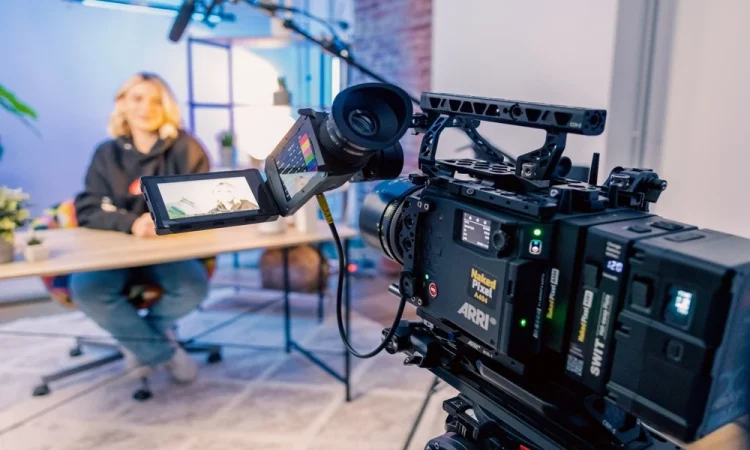
Corporate video can be produced by an internal content team, a freelance specialist, or a coordinated production crew. The right model is not determined by company size or a belief that one option is inherently more professional. It depends on the consequence of missing the message, the number of moving parts, the support participants need, and what must be delivered after filming. Compare responsibility and risk before comparing reels.
When an in-house team is the strongest fit
Internal teams understand the brand, have direct access to subject experts, and can respond quickly to recurring needs. They are well suited to regular updates, simple interviews, social explanations, and formats whose value comes from speed and familiarity. Existing equipment and established approval paths may make production efficient.
The constraint is capacity. A marketer may be expected to produce, direct, record sound, operate camera, manage files, and edit while also handling the campaign. The question is not whether the team can make a video; it is whether this assignment can receive the technical and editorial attention its risk requires.
Account for opportunity cost. If producing the film delays campaign planning, customer communication, or other specialized work, internal production is not free. On the other hand, a capable team with an established studio and repeatable format may have a lower coordination cost than briefing an external partner for every small update.
When a freelancer offers the right balance
A freelancer can add specialist craft without the structure of a larger crew. This works for a defined interview, a controlled location, a single-camera story, or an edit based on existing material. Direct communication can be fast, and one person may carry the visual approach from capture through post-production.
Clarify what is included beyond camera operation. Who develops the story, prepares speakers, records backup sound, manages lighting, tracks releases, creates captions, and handles a technical failure? A freelancer may provide many of these services, but the estimate should name them rather than relying on assumptions.
Continuity is another consideration. Ask where project files and masters will live, who can open them later, and what happens if the freelancer is unavailable for a revision. A clear archive and handoff preserve the advantages of a lean relationship without making one person the only route to the work.
When a full crew earns its coordination
A coordinated team becomes useful when several interviews, locations, formats, live moments, or technical disciplines overlap. Separate roles can protect sound while cameras move, prepare the next speaker while another is filmed, and manage media while the production continues. The value is not simply more people; it is simultaneous attention to risks that one operator cannot watch at once.
Teams evaluating business videography in Toronto can ask how the proposed crew maps to the brief. Every role should solve a real production problem. A large crew without clear responsibility can create as much friction as an understaffed one.
Compare ownership across the workflow
Put pre-production, production, and post-production responsibilities into a simple table or written scope. Include concept, script support, scheduling, location review, interview direction, camera, sound, lighting, data backup, editing, graphics, captions, review management, final exports, and archive. Mark what the client must supply and by when.
Then test the model against a change. If the executive becomes unavailable, who reshapes the day? If legal feedback removes a statement, who repairs the structure? If the campaign needs a vertical version, was it framed and licensed for that use? The better production model has an answer proportionate to the project.
Compare estimates with the same assumptions. Include number of filming hours, locations, cameras, interviews, edit lengths, review rounds, graphics, captions, music, travel, storage, and taxes where applicable. A cheaper scope that excludes essential work is not the same product. Ask what would change if the budget were reduced instead of assuming quality is the only adjustable variable.
Use consequence to make the final choice
Keep work in-house when the format is repeatable, the team has time, and a missed opportunity is easy to correct. Hire a freelancer when the assignment is focused and specialist craft closes a clear gap. Choose a full crew when access is scarce, the story is complex, or several deliverables and participants must be protected at once.
The choice can also change by stage. An internal team might develop the idea, a crew may capture the main campaign, and staff can later produce responsive follow-up clips using the approved visual system. Clear handoffs matter more than loyalty to one model.
Run a small pilot when uncertainty is high. One interview or focused story can reveal the real approval burden, participant support needs, and edit expectations. Use the pilot to refine the repeatable model; do not quietly expand a successful small format into a complex campaign without revisiting roles.
Review the relationship after delivery, not only the film. Did the model keep decisions clear, protect subject time, manage files responsibly, and deliver usable versions? A strong result achieved through unsustainable overtime or unclear ownership may not be the right recurring arrangement. Operational fit is part of creative value.
Production scale should follow responsibility. Choose the arrangement that can carry the real brief, support the people involved, preserve the final materials, and recover from likely problems without turning a straightforward video into unnecessary machinery.
The right fit should remain clear after the first delivery.